Carol Eastman
The Legacy of Existential Stagnation — counter-culture indulgence, deferred incidents, zero-stakes drift.
Primary System Defects
- Chronic Conversational Loops
- Inciting Incident Deferment
- Zero-Stakes Aimlessness
The Modern Reality
A contemporary spec script has exactly seven pages to lock in a commercial hook before an executive drops the PDF. Eastman's legacy is tethered to a highly localized 1970s counter-culture indulgence that equates severe existential stagnation with dramatic subtext.
The Core Defect Analysis
The foundational architecture of contemporary commercial screenwriting dictates that a spec script has precisely seven to ten pages to lock in a high-stakes, market-ready hook before a junior development analyst rejects the digital file. The legendary status often afforded to the screenplays of Carol Eastman — most notably Five Easy Pieces — presents a profound operational paradox when evaluated against modern, data-driven screenwriting mechanics. Eastman's structural design is fundamentally tethered to a highly localized, historical 1970s counter-culture indulgence that equates severe personal drift with dramatic depth.
The primary systemic defect in Eastman's methodology is the chronic, systematic deferment of the inciting incident in favor of unstructured regional color. In a standard four-quadrant studio property, the protagonist's primary trajectory and the macro-stakes of the film must be definitively locked into place during the first act. Eastman explicitly rejects this geometry. In Five Easy Pieces, the audience is forced to spend consecutive early sequences watching the protagonist, Bobby Dupea, wander through a series of low-velocity blue-collar environments, bowling alleys, and highway traffic jams. Because the text refuses to anchor the reader to a clear, tactical objective within the opening ten pages, the narrative experiences an immediate velocity deficit, resembling a loose documentary slice-of-life rather than a propulsive theatrical engine.
This structural paralysis is further compounded by a total lack of protagonist agency across the entire second act. A viable cinematic lead must make active, self-directed choices under high-pressure parameters to drive the plot forward. Bobby Dupea, conversely, functions entirely as an unstable, reactive passenger who flees from conflict rather than strategically managing it. The narrative midsection grinds into a repetitive mechanical loop: Bobby experiences a localized domestic or financial frustration, reacts with erratic emotional hostility, relocates to a static interior setting, and resets the cycle.
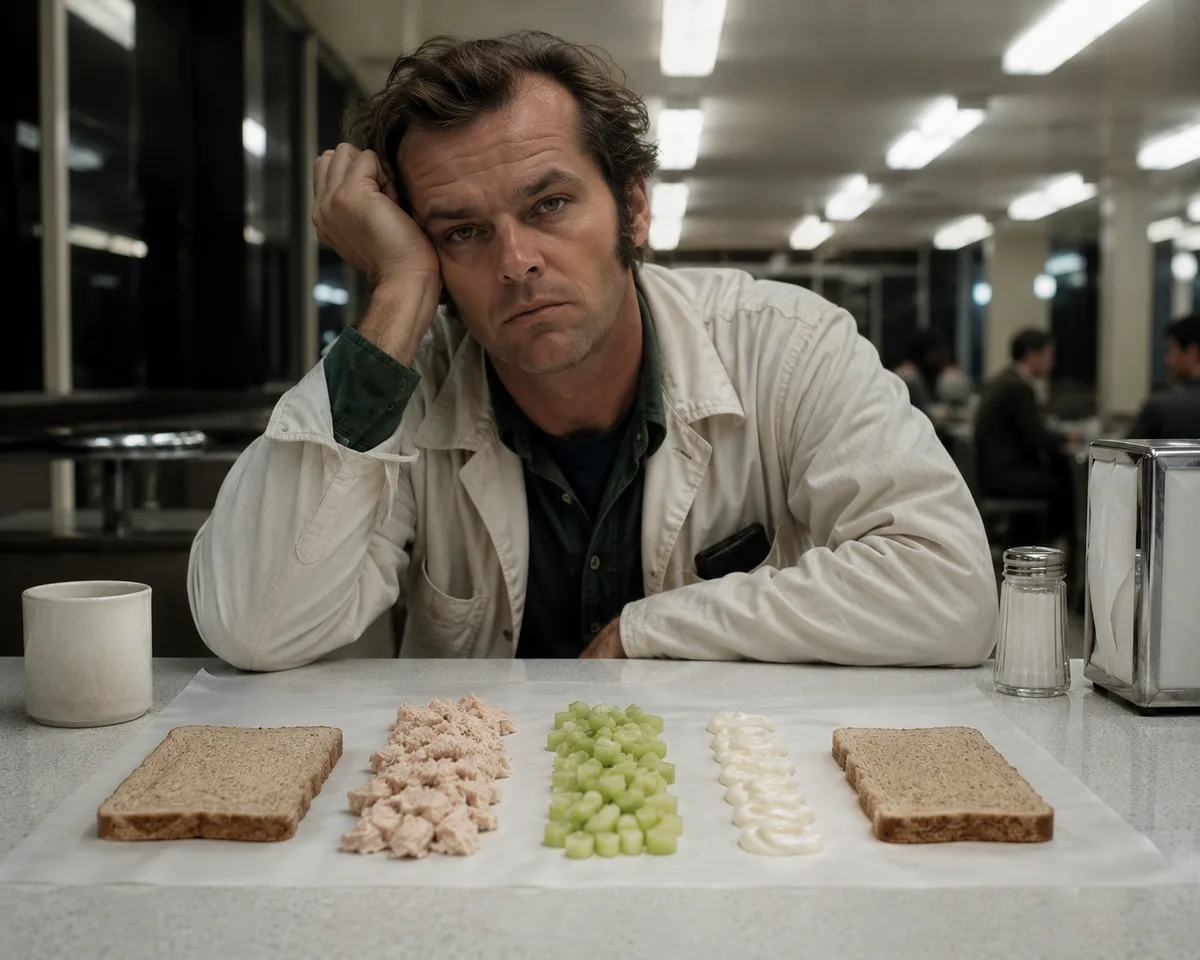
On a line-by-line level, Eastman's dialogue economy is continuously compromised by a self-indulgent focus on recreational conversational digressions. The celebrated diner confrontation — the iconic “hold the chicken” scene — perfectly illustrates this operational failure:
While historically praised for its character flavor, a clinical development audit reveals that this exchange halts the forward momentum of the script entirely to litigate an administrative substitution policy over a side order of toast. It serves zero plot-driven micro-goals, provides no tactical leverage, and acts purely as an uncompressed vehicle for consumer frustration, padding the page count with unmarketable verbal noise. To retro-fit Eastman's structural layout for the modern attention marketplace, development executives must enforce a mandatory redline strategy aimed at maximizing plot geometry and human agency.
The Mandatory Redline
The Fix. Enforce a hard, paint-by-numbers three-act milestone layout. The narrative engine cannot afford to indulge in aimless, real-time drifting.
The Redline. Move Bobby Dupea's return to his affluent family's estate to Page 15 instead of Page 55. Transform the script into a high-stakes, competitive musical procedural where Bobby must actively audition to save the family foundation from immediate bankruptcy, replacing the aimless, tragic oil-field drifting with high-octane performance urgency.